


Paul Schrader’s Blue Collar (1978) is one of the lasting cinematic testaments of American labor as it was then and is now: militant but not yet revolutionary, hardscrabble but hampered, anarchistic but arrested—a bruised, convulsing, insurgent material movement tossed off the national stage, shattered into siloed unions and sorely bereft of the bread-breaking ethos that could redeem the ideal of one table for all workers.
Here is what’s happening off-screen: Walter Reuther, the longtime progressive president of the United Auto Workers (UAW), is the latest in a long line of radicals to die an untimely death, and the crash of his plane spells the plunge of his social democratic project to effect universal healthcare, public education, affordable housing, and increased enfranchisement of workers, women, and minorities through the exercise of labor power. Likewise, the widespread enshrinement of “no strike, no lockout” clauses in union contracts, which had begun during WWII as a nationalistic promise on the part of labor leadership to promote and preserve the productivity of vehicles and weapons undergirding the American war effort had become, decades later, a castration that limited work stoppages to the period between the lapse of one contract and signing of another. Labor power was legally defined and legally bound, and legality, as it always is in the final calculus of American politics, was an open expression of the self-serving cynicism of rulers opposed to the proletarian gains that had come from the exercise of labor power already.
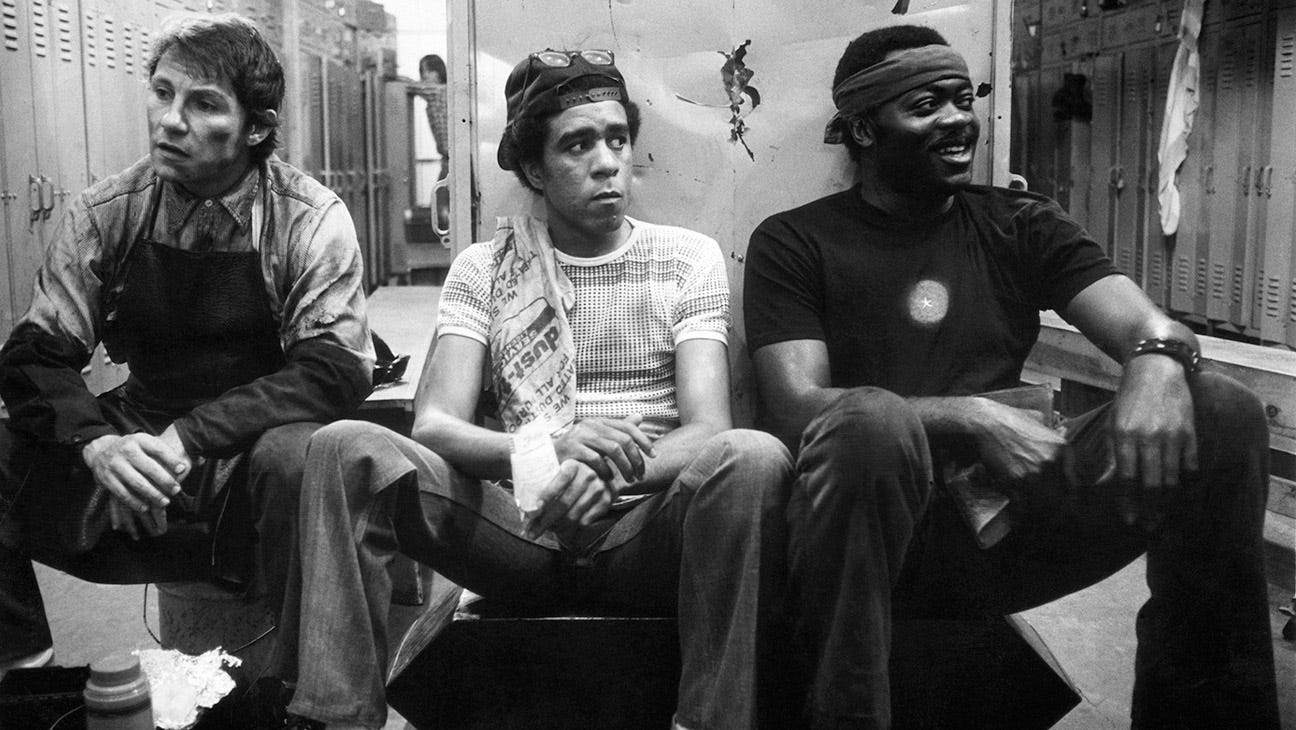
So Schrader’s trio of Detroit auto workers—Jerry Bartowski, Zeke Brown, and Smokey James—played by Harvey Keitel, Richard Pryor, and Yaphet Kotto, respectively, are part of a workers’ movement on the wane. The president of their UAW local, Eddie “Knuckles” Johnson, “was a ball buster when he came up, but that was thirty years ago,” and now he can’t even be bothered to fix a broken locker, feigning a phone conversation with a shop steward to get a plaintive Pryor off his back. That shop steward seems to think his job isn’t contract enforcement but maintaining the status quo, making sure the workday is no more dangerous and difficult than it’s always been, and certainly not less; his preferred form of redress is forcing the foreman to buy wronged workers a bottle of scotch that everybody knows will never manifest. And the foreman is a stereotypical middle manager; he goes right back to riding people’s asses like they’re saddlehorses.
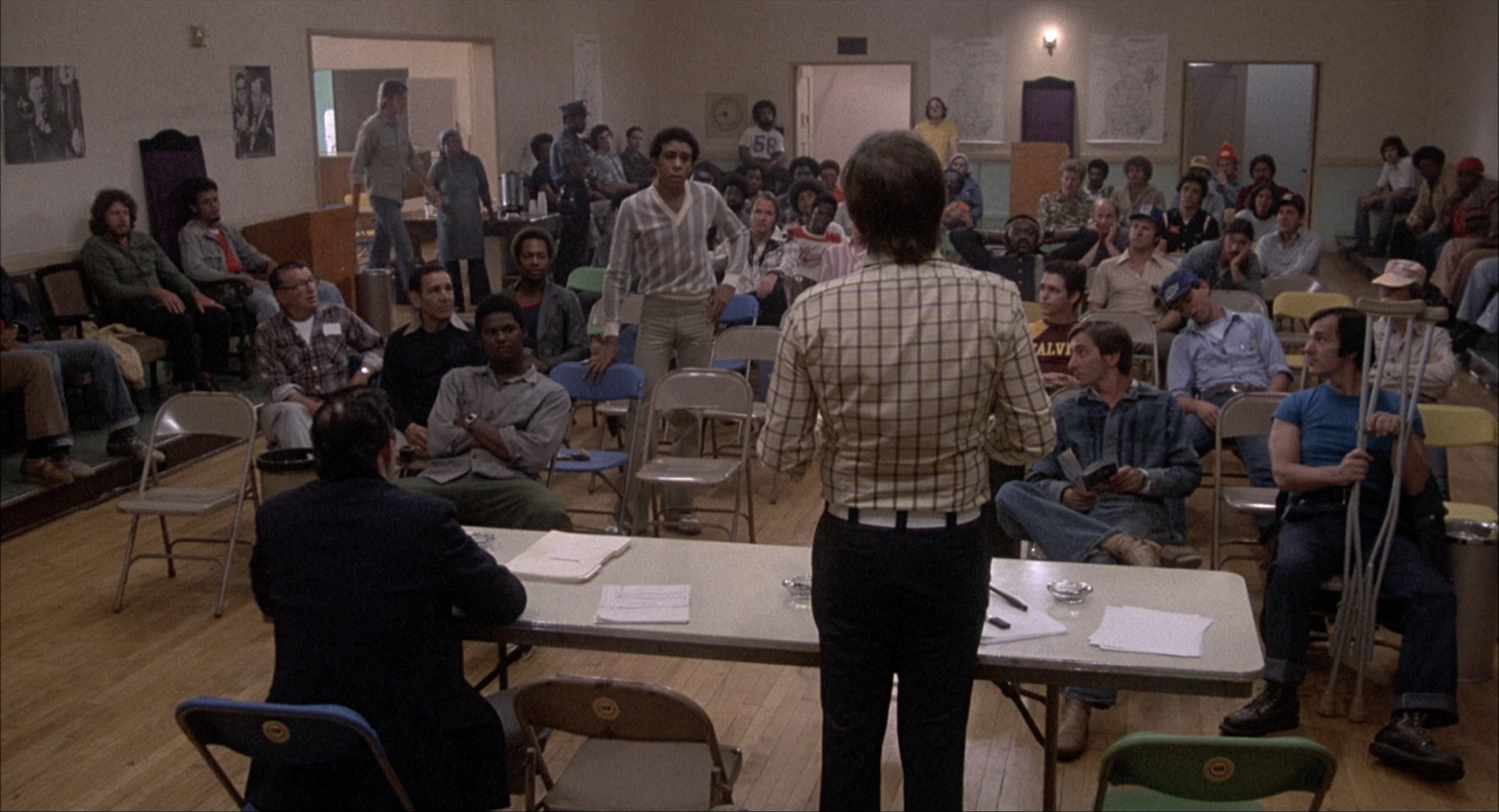
All of them, along with Jerry, Zeke, and Smokey, wander through a rotting reliquary of a union hall home to reminders of a history they’ve fallen out of step with. Photos of union officials and union members shaking hands with MLK Jr. and JFK and participating in the prior decade’s civil rights struggles adorn the walls there while the walls of their local watering hole are plastered with police reserve recruitment posters, a premonition of the atrophy of actual labor and the insidious transfer of benefits actual unions won to the enforcement arms of state repression. Jerry Bartowski, by his own admission, spent every day of a 73-day strike three years prior on the picket line. The chants and the slogans still ring in their ears and their dues still come out of their pay, but Schrader’s workers see less of their demands magnified by maverick movers, see less of their demands being met, and are losing sight of themselves as the arsenal of democracy. They, all of them, have some second job or side hustle and some responsibility to their family they still can’t meet, whether that be braces for a daughter’s crooked teeth or a heartier dinner than Hamburger Helper and Wonder Bread. But they, all of them, still recognize the common burden of their need, and all of them ask what everybody who’s ever worked for their bread asks themselves every day: what is the point of working if you can’t afford to shelter and feed yourself and your loved ones, along with a little medicine and a little leisure when you need it, and have some money left over to save for when you can’t work anymore? If you can’t do that after trading in 40 hours of your life then, like Zeke says, “the [auto] plant’s just short for plantation.”
Zeke, Jerry, and Smokey—debauched and more depressed than usual by the realization that they work not for themselves and each other but “cause the credit man need your paycheck”—plot to steal from the local’s safe, and Jerry poses a rhetorical question during the film’s desperate denouement that welds all the shit that’s been shoveled in their way thus far into a microcosmic American mishegoss: “Why is your family more important than my family?” Schrader’s irascible grasp of the American Dream, the American political project, is that it is Calvinistically predestinating and deterministic. The point has never just been to do better for your family; the point has always been to do better for just your family. There’s an ungodly glee in knowing someone else suffers more severely if you think that somehow saves you. What every powerful entity that has ever existed in this place has done, be they a corrupt and flagging union or the taxman or the feds or any other puritanically-tinged feudalistic enterprise, is convince everybody that the best way to keep your blood from running is to let somebody else’s blood run. In Blue Collar’s final, immortal freeze-frame, we all hang separately.
P.S. Schrader might be softening in his old age, and the labor movement is returning to its roots, too. On March 4th, he boosted the strike fund of NYC Alamo Drafthouse workers striking against illegal layoffs perpetrated by new owner, Sony—workers organizing with and represented by my own local, UAW 2179. I’m a shop steward at Strand Book Store where, in 2024, we went out on strike and won a 37% raise over the course of our new contract, and our local is helping workers at other theaters like Nitehawk and Cinema Village organize, too. And in 2023, UAW auto locals led simultaneous strikes against all of the Big Three Detroit automakers, winning record concessions and sparking an ongoing campaign to unionize auto plants throughout the U.S. When we fight, we win.
Thanks much for this. Wow, what a cast-director-thematic combo; looking forward to seeing it!. And I think your PS is very important, too. There was a good piece on this by Michael Podhorzer earlier this year. If you haven't already seen it:
https://open.substack.com/pub/michaelpodhorzer/p/oligarchs-understand-power-do-we?utm_source=share&utm_medium=android&r=7y800
It includes a great chart of changes in public trust since 2008, based on Gallup's annual surveys on same. As you might expect public trust in virtually every type of institution has declined, in many cases precipitously, except one: labor unions, in which trust has risen nearly 20 points since the Great Recession.
Feels like there are real opportunities to make pro-labor cinema that could really shake up the ol' box office. We'll know it's on for sure when there's a July 4th open in which the Marvel superheroes realize how used and exploited they've been and form a union against their capitalist overlords. Maybe they even find common cause with their arch-enemies along the way. As MLK might say today, when the Trump and Bernie voters get together, that's the beginning of the end of oligarchy ;)